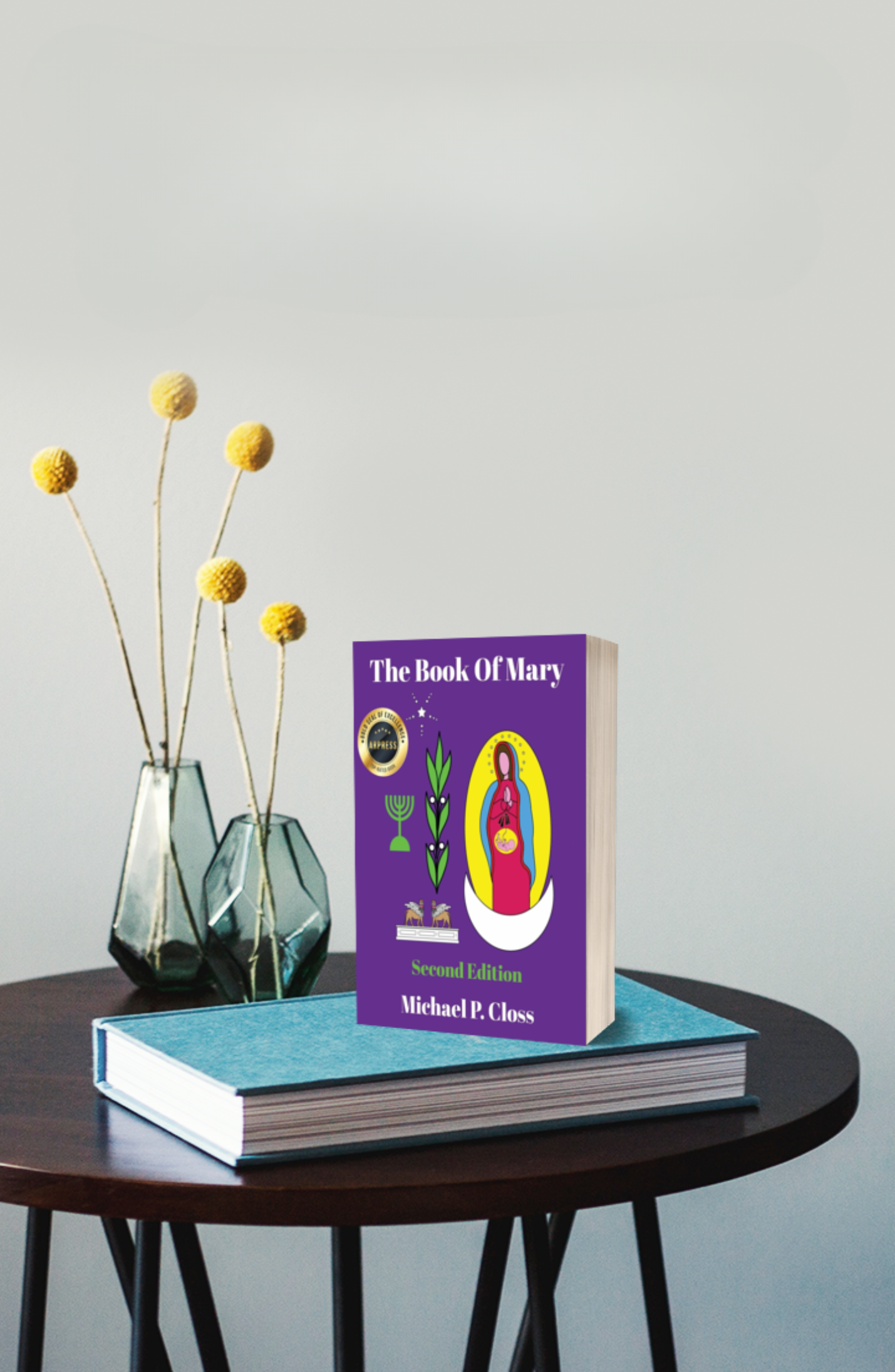
Mary and the Conception of Jesus
The annunciation to Mary and her conception of Jesus are detailed in Protevangelium 11. It begins with a courtship ritual that occurs with a blessing of Mary by the Voice of God at a time when Mary approaches a well to obtain water, a context found in many key marriages in the Bible.
The Voice of God addresses Mary. ‘Hail you who have received grace, the Lord is with you; blessed are you among women’ (Protevangelium 11.1).
When a frightened Mary returns home she then receives an angelic visitation which informs her that she has ‘found grace before the Lord of all’ and ‘shall conceive according to his word’. A dialog ensues in which Mary asks two very important questions. Each is associated with menstrual defilement of the temple. One pertains to the conception of the child given a first intercourse, and the other concerns the birth of the child. These pose problems for Mary since she is unable to defile the law of holiness of the temple. The angel reassures her that she need not fear because ‘the power of the Lord shall overshadow you’. Mary is also told that her child will be the ‘Holy One’ and will be called ‘the Son of the Most High’. He is to be named ‘Jesus’ for he shall save ‘his people from their sins’. (Protevangelium 11.2– 3). All these statements are made even before Jesus is conceived.
Mary then consents to the proposal and announces that she is ‘the servant of the Lord’. In her own words, as an adult, she embraces the nazirite vow that her mother had placed on her.
With Mary’s agreement, she then becomes pregnant when the power of the Lord God overshadows her. No specific details are given about what this means.
With her pregnancy, Mary literally becomes a holy of holies of God. She carries a son who is both human (son of Mary) and divine (the Holy One and Son of the Most High). Mary is the Ark of the Covenant in the New Temple foreseen by Ezekiel.
This fulfills the enactment of the prophecy in Protevangelium 7.4. The priest ‘placed her on the third step of the altar, and the lord God sent his grace upon her, and she danced with her feet, and the whole house of Israel loved her’.
Then he brought me to the gate, the gate facing east. And there the glory of the God of Israel was coming from the east; the sound was like the sound of mighty waters; and the earth shone with his glory. … As the glory of the Lord entered the temple by the gate facing east, the spirit lifted me up, and brought me into the inner court; and the glory of the Lord filled the temple. (Ezekiel 43:1–2, 4–5).

Our Lady of the Heavenly Holy of Holies
Artists, Michael and Katie Closs, 2024
Mary, who is now pregnant, then returns to her weaving. When her work is complete she then brings the fabric to the high priest (Protevangelium 12.1). Although Mary is pregnant there is no blood defilement of the fabric that Mary has prepared since the power of the Lord has overshadowed her at the time of her conception. Mary therefore remains a virgin. Next, Mary goes to visit her kinswoman, Elizabeth (Protevangelium 12.2). Both the high priest and Elizabeth, in their own manner, attest that Mary is pregnant with the Messiah.